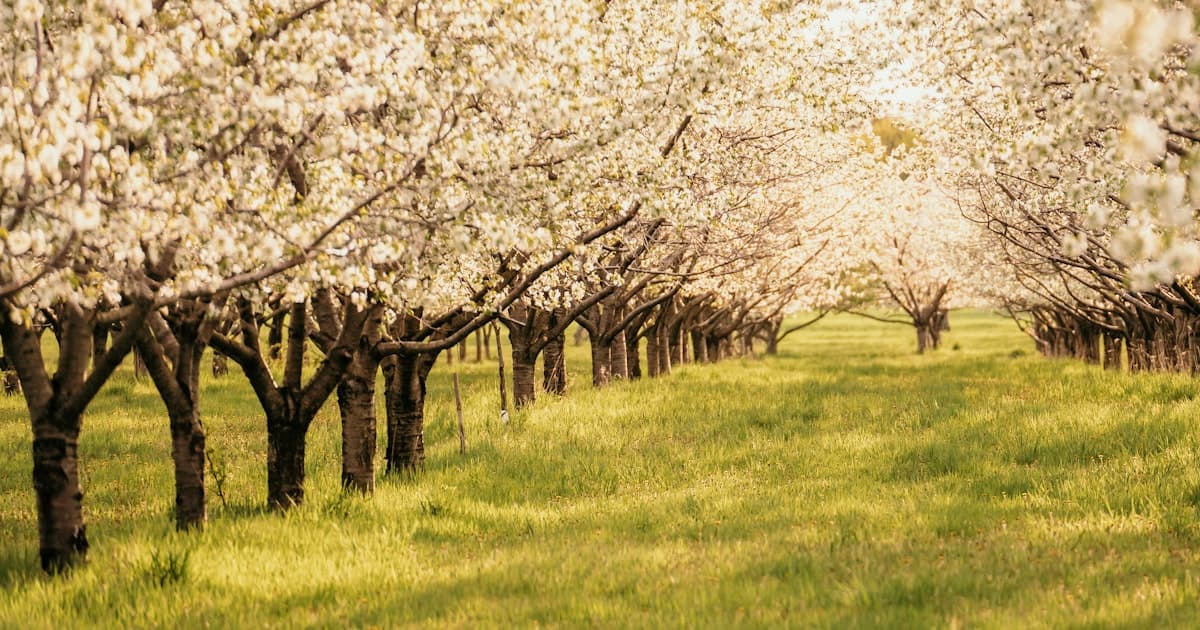
Spring around Traverse City is a transition season. Snow, mud, rain, blossoms, and warm afternoons can overlap. Avoid planning around a guaranteed bloom date or assuming a trail is ready because downtown is dry.
Follow current trail conditions
TART Trails publishes current trail pages and route information. Respect closures and avoid widening muddy trails by walking around puddles.
At Sleeping Bear Dunes, check current NPS conditions. Seasonal roads, facilities, and ferry operations may not share the same opening date.
Grand Traverse Regional Land Conservancy maintains a protected-property finder with property-specific maps and rules. Some preserves restrict activities or temporarily close sensitive areas.
Cherry blossoms
Bloom timing depends on the variety, location, and weather. For current agricultural context, use Michigan State University Extension fruit resources and local orchard or farm pages. View orchards from public roads or invited visitor areas; do not enter private rows for photographs.
The same caution applies to winery and farm visits. Confirm that a property is open to visitors and follow its parking, photography, pet, and reservation rules.
A flexible spring day
Pair one weather-dependent plan with a nearby indoor backup:
- A short TART segment plus the Dennos Museum Center
- An Old Mission drive with stops only at businesses that confirm they are open
- A Sleeping Bear scenic stop plus an NPS visitor center, after checking current operations
- A downtown walk plus the Traverse Area District Library or State Theatre
Bring layers and waterproof footwear. Great Lakes water remains cold even on warm spring days; consult NWS cold-water safety.
Wild mushrooms: do not rely on a travel guide
ExploreTraverse does not provide mushroom-identification instructions. Morels have toxic look-alikes, and no single feature—such as a hollow stem—is enough for a novice to establish that a mushroom is safe.
Rules also depend on the land manager. Collection may be prohibited or limited, and private land requires permission. Check the specific property's rules before collecting anything.
Michigan regulates wild-foraged mushrooms sold to food establishments and provides wild-foraged mushroom information. For personal safety, seek hands-on identification from a qualified local expert and never eat a mushroom when identity is uncertain.
If mushroom poisoning is suspected, do not wait for symptoms or use a social post for diagnosis. Call Poison Control at 1-800-222-1222; call 911 for a life-threatening emergency. See Poison Control's immediate-assistance page.
Verify seasonal operations
Spring hours, patios, tours, restrooms, and rentals can change quickly. Check the official venue page on the day of the visit. This guide intentionally avoids fixed bloom dates, drive times, and opening promises.
Last verified July 27, 2026.